Delving into the Realm of Enterprise Resource Planning (ERP)
What is ERP?
Enterprise resource planning (ERP) is a comprehensive software solution that integrates various business processes into a unified system. It enables organizations to manage their operations more efficiently and effectively by providing a central platform for managing core business functions such as finance, supply chain management, manufacturing, human resources, and customer relationship management.
Benefits of ERP Systems
ERP systems offer numerous advantages to businesses, including:
- Improved operational efficiency: By automating and streamlining business processes, ERP systems eliminate manual tasks, reduce errors, and increase productivity.
- Enhanced data accuracy: ERP systems provide a single source of truth for business data, ensuring accuracy and consistency across all departments.
- Increased collaboration: ERP systems facilitate seamless communication and collaboration between different departments, breaking down silos and fostering a more cohesive work environment.
- Improved decision-making: ERP systems provide real-time access to comprehensive business data, empowering managers to make informed decisions based on accurate and up-to-date information.
- Reduced costs: ERP systems can help businesses reduce costs through improved efficiency, reduced errors, and optimized inventory management.
 .
.
Disadvantages of ERP Systems
While ERP systems offer significant benefits, they also have some potential drawbacks:
- High implementation costs: ERP systems can be expensive to implement, requiring substantial investment in software, hardware, and consulting services.
- Complexity: ERP systems can be complex and require extensive training for users to become proficient.
- Maintenance costs: ERP systems require ongoing maintenance and upgrades, which can add to the overall cost of ownership.
- Potential disruption during implementation: Implementing an ERP system can be a disruptive process, requiring significant time and effort from the organization.
- Resistance to change: Some users may resist the implementation of an ERP system, fearing job loss or changes to their work routines.
 .
.
Essential Elements of an ERP System
ERP systems typically include the following core modules:
- Financial management: Manages financial transactions, including accounts payable, accounts receivable, general ledger, and budgeting.
- Supply chain management: Optimizes the flow of goods and services, including inventory management, order processing, and logistics.
- Manufacturing: Manages manufacturing operations, including production planning, scheduling, and quality control.
- Human resources: Manages employee information, payroll, benefits, and performance reviews.
- Customer relationship management: Tracks customer interactions, manages sales pipelines, and provides customer support.
ERP Implementation Process
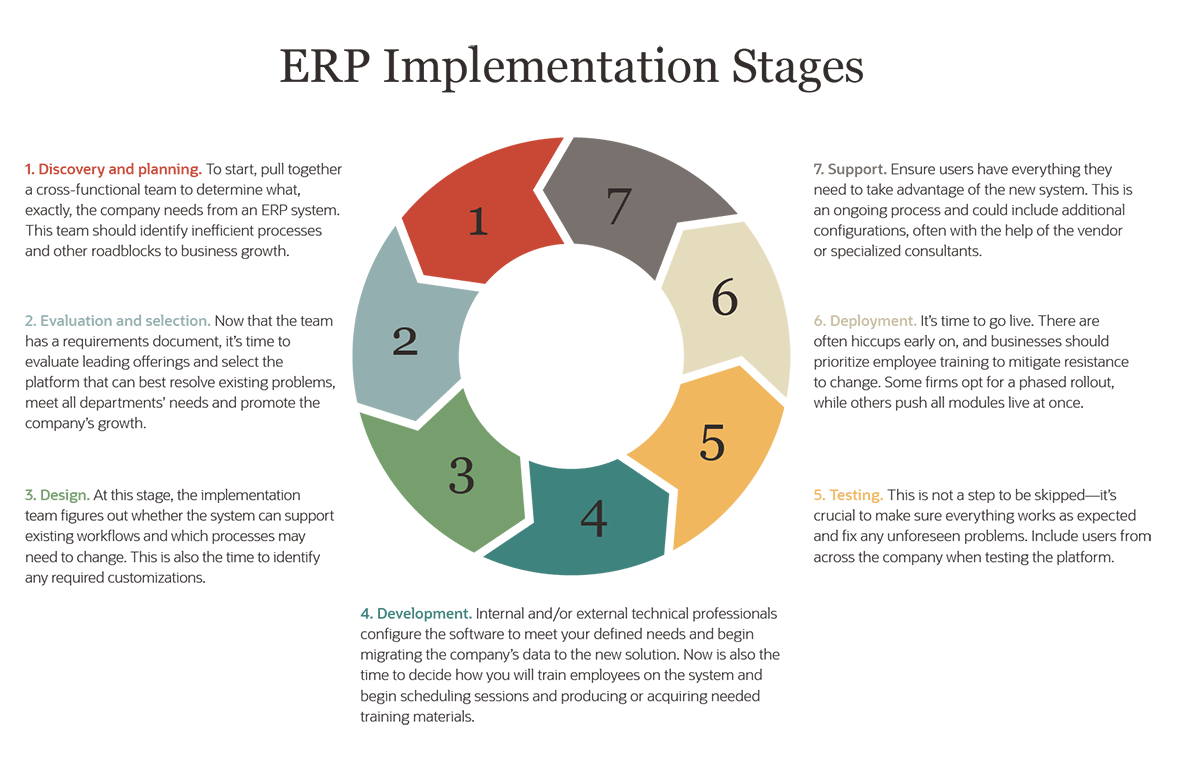
Implementing an ERP system typically involves the following steps:
- Assessment: Determine the organization’s business needs and identify the best-fit ERP solution.
- Planning: Develop a detailed implementation plan, including timelines, budgets, and resource allocation.
- Configuration: Customize the ERP system to meet the organization’s specific requirements.
- Data migration: Transfer data from existing systems into the new ERP system.
- Training: Train users on the new ERP system and provide ongoing support.
- Go-live: Launch the ERP system and monitor its performance closely.
- Optimization: Continuously improve the ERP system to maximize its benefits.
FAQs on ERP Systems
-
What is the difference between ERP and CRM?
ERP systems focus on managing internal business processes, while CRM systems focus on managing customer relationships. -
What is the best ERP system for my business?
The best ERP system depends on the size, industry, and specific needs of the organization. -
How long does it take to implement an ERP system?
Implementation timelines can vary depending on the complexity of the system and the organization’s size. -
What are the common challenges in ERP implementation?
Common challenges include resistance to change, data migration issues, and lack of user training. -
How can I measure the success of my ERP implementation?
Key performance indicators (KPIs) such as increased efficiency, improved data accuracy, and reduced costs can be used to measure success. -
What are the latest trends in ERP?
Cloud-based ERP, artificial intelligence (AI), and robotic process automation (RPA) are emerging trends in the ERP market. -
How can I avoid common ERP implementation pitfalls?
Thorough planning, user involvement, and ongoing support can help avoid common pitfalls. -
What are the best practices for ERP system optimization?
Regular upgrades, user feedback, and continuous improvement efforts can optimize ERP systems. -
How can I ensure user adoption of my new ERP system?
Effective communication, training, and support are crucial for successful user adoption.
Conclusion: Embracing ERP for Business Success
ERP systems have become indispensable tools for businesses seeking to improve their operations, increase efficiency, and gain a competitive edge. By carefully considering the benefits, disadvantages, and essential elements of ERP systems, organizations can make informed decisions about whether an ERP implementation is right for them. With proper planning, execution, and ongoing optimization, ERP systems can empower businesses to achieve their full potential and drive sustainable growth.
.